
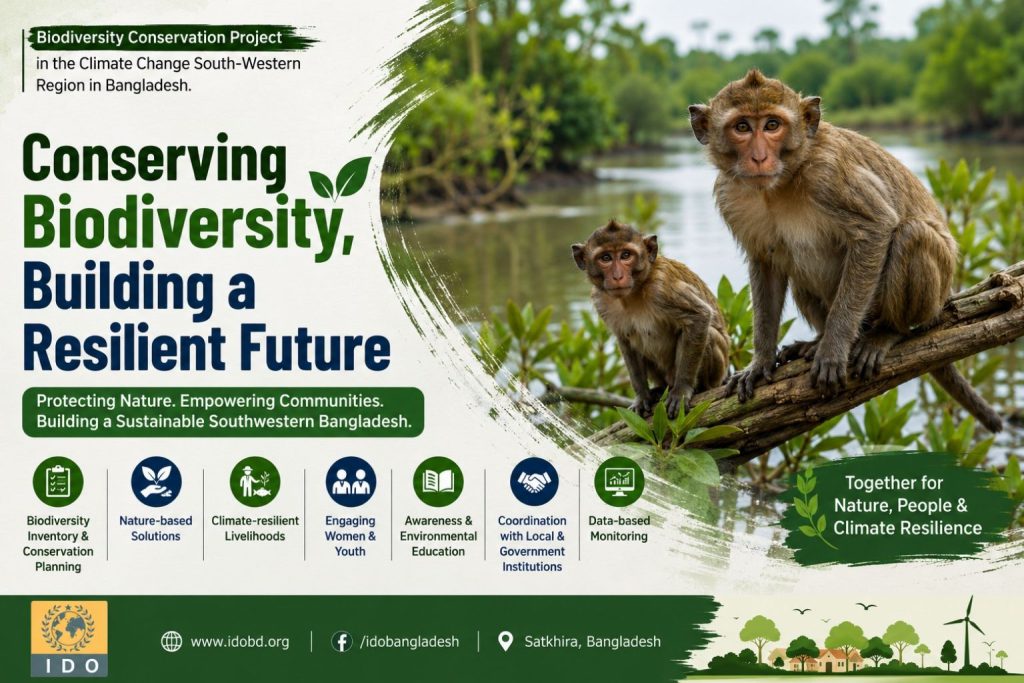
Protecting Nature. Empowering Communities. Building a Sustainable Future.
The southwestern region of Bangladesh is facing growing threats from climate change. Cyclones, storm surges, increasing salinity, erratic rainfall, river erosion, waterlogging, and rising temperatures are putting people, livelihoods, and natural ecosystems under increasing pressure
With sharp graphics and instant access, this casino keeps the action in your hands at all times. Experience smooth gaming anywhere with Gamblezen.At the same time, the region’s rich biodiversity is rapidly declining as forests, wetlands, rivers, canals, agricultural lands, and other natural habitats continue to experience environmental changes.
A Community-Centered Approach to Biodiversity Conservation
In response to these challenges, IDO is implementing a Biodiversity Conservation Project in the southwestern region of Bangladesh. The project seeks to conserve biodiversity and natural resources, strengthen climate resilience, and promote environmentally friendly and sustainable livelihoods through meaningful participation of local communities.
The project particularly focuses on engaging women, youth, and marginalized communities in nature conservation, environmental management, awareness-building, and climate-resilient development.
Key Challenges
Several interconnected challenges are affecting biodiversity and community resilience in the region:
- Increasing salinity and waterlogging are changing natural habitats.
- Rivers, canals, wetlands, and other natural resources are being degraded.
- Dependence on natural resources and limited alternative livelihoods are increasing pressure on biodiversity.
- Indiscriminate tree felling, habitat alteration, excessive use of pesticides and chemicals, and illegal harvesting are damaging ecosystems.
- Limited environmental awareness and weak coordination among stakeholders are making conservation efforts more difficult.
- Local communities often have limited opportunities to participate effectively in conservation-related decision-making.
Seven Areas of Action
To make conservation effective and sustainable, the project places local communities at the center of planning and decision-making. Key actions include:
1. Biodiversity Inventory & Conservation Planning
Identifying vulnerable flora, fauna, and natural habitats and developing local conservation plans.
2. Nature-Based Solutions
Planting locally suitable trees, restoring native species, conserving wetlands and canals, and strengthening natural defenses.
3. Climate-Resilient Livelihoods
Supporting eco-friendly agriculture, fisheries, livestock rearing, small-scale entrepreneurship, and other livelihoods that are compatible with climate risks.
4. Women and Youth Engagement
Creating opportunities for women and young people to lead conservation, environmental education, awareness, and green entrepreneurship initiatives.
5. Awareness & Environmental Education
Building continuous awareness about biodiversity and climate change through schools, communities, local institutions, and social organizations.
6. Stronger Local Coordination
Encouraging collaboration and information sharing among local government, government departments, NGOs, research institutions, and communities.
7. Data-Based Monitoring
Regularly documenting biodiversity changes, climate risks, and impacts on community livelihoods to support better decision-making.
Nature and People: A Shared Future
Biodiversity conservation and climate resilience are deeply interconnected. Protecting natural resources cannot be separated from protecting the livelihoods, knowledge, participation, and rights of the communities who depend on them.
Through active community participation, local leadership, knowledge sharing, partnerships, and sustainable practices, IDO’s project aims to build a stronger connection between nature conservation and climate-resilient development.
The long-term success of these efforts will depend on strengthening local ownership, expanding partnerships, using local knowledge, and scaling up successful initiatives. Together, these efforts can help vulnerable communities become more resilient while protecting Bangladesh’s vital biodiversity and natural resources for future generations.
 Protect Nature. Strengthen Communities. Build Resilience.
Biodiversity is not only about protecting wildlife and ecosystems—it is about protecting the future of people and the planet.