
Access to safe water and sanitation is essential to human dignity and a fundamental human right. Yet, communities living in climate-vulnerable coastal areas of Bangladesh continue to face serious challenges in accessing safe drinking water. Koyra and Paikgancha upazilas of Khulna are among the areas severely affected by climate-related water challenges With sharp graphics and instant access, this casino keeps the action in your hands at all times. Experience smooth gaming anywhere with Gamblezen.
A Daily Struggle for Safe Drinking Water
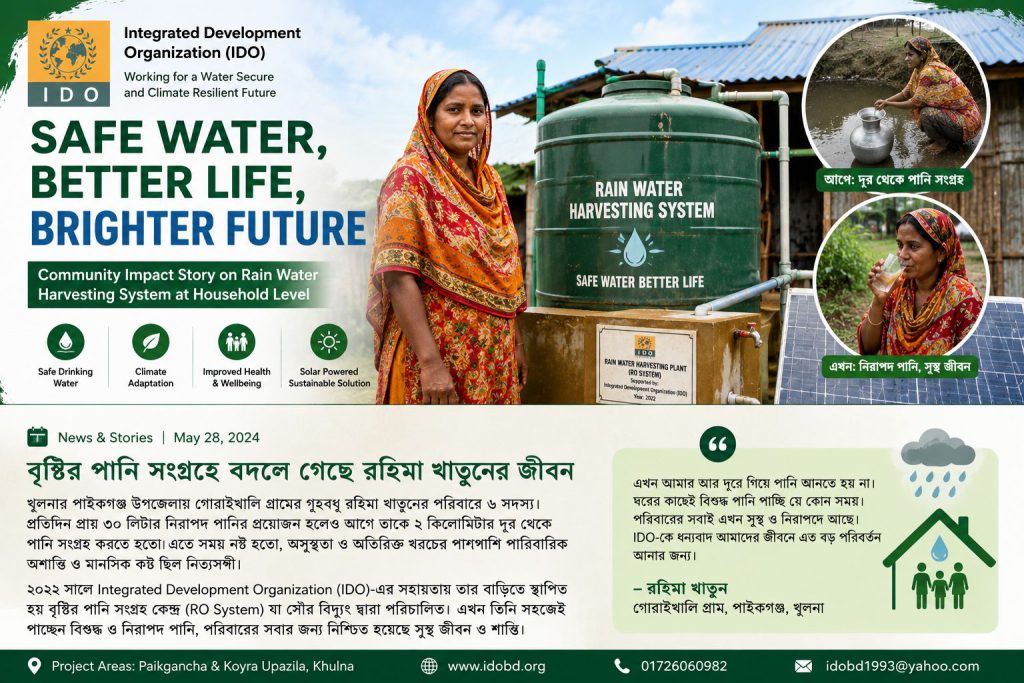
Rahima Khatun, a 45-year-old housewife from Goarikhali village in Paikgancha upazila, Khulna, lives with her six-member family. Before the intervention, her family needed approximately 30 litres of safe drinking water every day.
To collect water, Rahima had to travel approximately two kilometres from her home, a journey that could take almost two hours. When she was unable to collect enough water, the family was sometimes forced to use contaminated pond water. This contributed to frequent illness and additional expenses for treatment and medicine. The situation also created significant pressure within the household.
A Sustainable Solution at Her Doorstep
In 2022, with support from Integrated Development Organization (IDO), a rainwater harvesting plant was installed at Rahima’s household.
The system incorporates a Reverse Osmosis (RO) system powered by solar energy, enabling the family to collect and access safe drinking water directly from their home.
The intervention has transformed Rahima’s family’s daily life. She no longer needs to travel long distances to collect drinking water, and safe water is now available at her doorstep whenever needed.
From Water Insecurity to Greater Wellbeing
The household rainwater harvesting system has reduced the family’s anxiety around collecting safe drinking water and helped them avoid relying on contaminated pond water.
According to the case study, the family is now able to ensure safe drinking water for its members and feels much happier and more secure. Rahima also expressed her gratitude to IDO for installing the rainwater harvesting plant and providing technical support and maintenance.
A Small Intervention, A Meaningful Change
Rahima’s experience demonstrates how a locally appropriate, climate-resilient water solution can make a meaningful difference in the everyday lives of vulnerable coastal communities.
For families living in climate-affected areas, access to safe water is not simply a matter of convenience—it is closely connected with health, dignity, household wellbeing and resilience.
IDO’s Commitment to Water Security
Integrated Development Organization (IDO) has been working since 1993 in the southern coastal belt of Bangladesh, focusing on water, sanitation and hygiene issues among climate-affected communities. Its work aims to promote safe water, improved sanitation and better hygiene practices.
Building on this experience, IDO has proposed the PANI – Promoting Access to New Initiative project, which is intended to work across 10 unions of Paikgancha and Koyra upazilas in Khulna, some of the areas most affected by climate change and salinity-related safe-water challenges.
Creating a Water-Secure and Climate-Resilient Future
Rahima Khatun’s story is one example of how sustainable water solutions can help vulnerable families move toward a safer and more dignified future.
IDO remains committed to working with climate-affected communities to expand access to safe water, strengthen resilience and promote healthier and more sustainable lives.
Integrated Development Organization (IDO)
Sagardari, Keshabpur, Jashore-7450, Bangladesh